


What Makes Cetyl Tranexamate HCl Stand Out?
Understanding Cetyl Tranexamate HCl: The Science Behind the Ingredient
To appreciate the uniqueness of Cetyl Tranexamate HCl, it is essential to first understand its parent compound, Tranexamic Acid (TXA). TXA is a well-known synthetic amino acid derivative widely used in dermatology for its skin-brightening and anti-inflammatory properties. However, traditional TXA is highly water-soluble, which limits its ability to penetrate the skin’s lipid-rich outer barrier, the stratum corneum. This poor permeability results in low bioavailability in the deeper skin layers, reducing its overall efficacy when applied topically.
Cetyl Tranexamate HCl addresses this limitation through a simple yet powerful molecular modification: the addition of a cetyl (C16) long-chain fatty acid to the TXA molecule, forming an ester bond. This transformation converts the water-soluble TXA into a lipid-soluble (Oil-soluble) compound. Chemically, it is defined as C₂₄H₄₈ClNO₂ with a CAS number of 913541-96-5, appearing as a white to off-white crystalline powder.
The mechanism of action of Cetyl Tranexamate HCl is both targeted and gentle. Once applied to the skin, its lipophilic nature allows it to easily pass through the intercellular lipid matrix of the stratum corneum and reach the viable epidermis and basal layer, where melanocytes reside. Upon penetration, skin enzymes called esterases gradually hydrolyze the ester bond, releasing pure, active tranexamic acid over an extended period (up to 12 hours). This slow-release mechanism ensures a sustained and localized effect.
The released TXA works by inhibiting the plasminogen/plasmin pathway. Plasmin is an enzyme that triggers the production of pro-inflammatory mediators like prostaglandins (PGE2) and arachidonic acid. These mediators are key signals that activate melanocytes, stimulating melanin synthesis and transfer to keratinocytes. By blocking this pathway upstream, Cetyl Tranexamate HCl prevents melanocyte overactivation, reduces melanin production, and inhibits the transfer of melanin to the skin’s surface—all while calming inflammation and redness.
Key Advantages of Cetyl Tranexamate HCl
Unmatched Skin Penetration and Bioavailability
The most significant advantage of Cetyl Tranexamate HCl over traditional TXA is its dramatically enhanced skin penetration. The lipophilic cetyl chain acts as a "molecular key," allowing the ingredient to dissolve into the skin’s lipid barrier, whereas water-soluble TXA is largely repelled. Studies indicate that Cetyl Tranexamate HCl can penetrate the skin up to 97 times more efficiently than standard TXA. Another report notes it delivers 283% more active TXA into the skin compared to equivalent amounts of conventional TXA. This superior penetration ensures the active ingredient reaches the target cells in meaningful concentrations, maximizing efficacy.
Potent, Long-Lasting Brightening Efficacy
Cetyl Tranexamate HCl is far more potent than its parent compound. Research suggests it is approximately 60 times more effective at skin lightening than pure tranexamic acid. Its slow-release profile provides sustained efficacy over hours, avoiding the "peak and crash" effect of water-soluble ingredients that are quickly washed away or metabolized. This prolonged action makes it highly effective for treating stubborn pigmentation concerns, including melasma, age spots, sun spots, and post-inflammatory hyperpigmentation (PIH) from acne or inflammation.
Excellent Stability for Formulations
Formulation stability is a critical pain point for many brightening ingredients, which can degrade, discolor, or cause phase separation in products. Cetyl Tranexamate HCl offers premium crystalline stability with a precise melting point of 131°C–135°C, confirming high purity without residual wax or impurities. It is resistant to high-temperature processing and long-term storage, eliminating common issues like gelation, discoloration, or abnormal crystal precipitation in emulsions. This stability ensures the final product maintains its efficacy, texture, and appearance throughout its shelf life.
Gentle and Safe for Sensitive Skin
Many potent brightening agents (e.g., hydroquinone, high-concentration vitamin C) can cause irritation, redness, dryness, or peeling, especially for sensitive skin. Cetyl Tranexamate HCl has a remarkably mild safety profile. Its slow, controlled release minimizes direct irritation, and it works via an anti-inflammatory pathway that soothes the skin while brightening. Clinical trials confirm it is well-tolerated, with no significant adverse reactions reported even in sensitive skin populations. This makes it suitable for all skin types, including sensitive, acne-prone, and post-procedure skin.
Multi-Benefit Action: Brightening + Anti-Inflammation + Anti-Aging
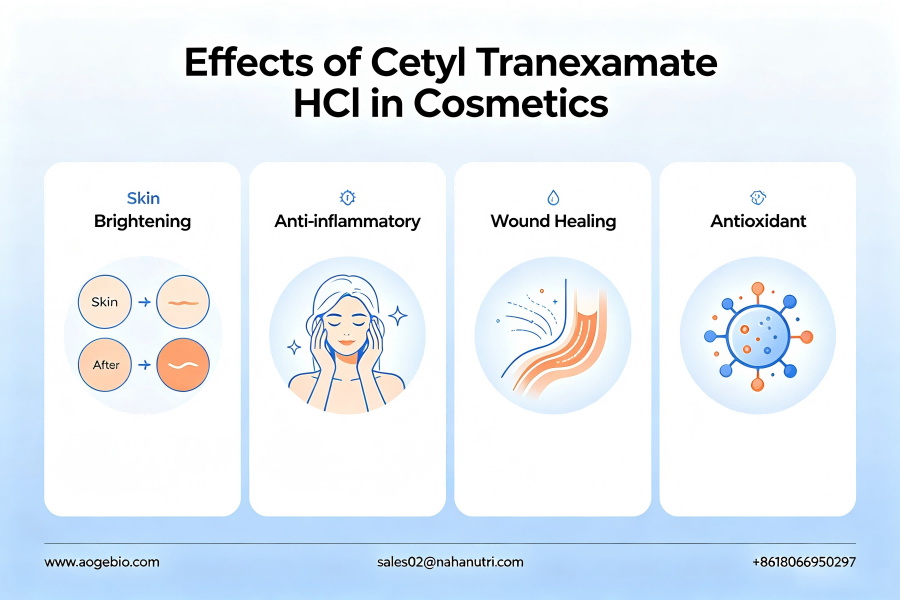
Unlike single-purpose brightening agents, Cetyl Tranexamate HCl provides multiple skincare benefits in one ingredient:
Brightening: Inhibits melanogenesis and melanin transfer, fading dark spots and evening skin tone.
Anti-inflammatory: Reduces redness, erythema, and inflammation from UV damage, acne, or irritation.
Anti-aging: In vitro studies show 2% Cetyl Tranexamate HCl promotes collagen synthesis in human fibroblasts, supporting skin firmness and elasticity.
UV protection support: Prevents UV-induced melanocyte activation, reducing sun damage and photoaging.
Applications in Cosmetic Formulations
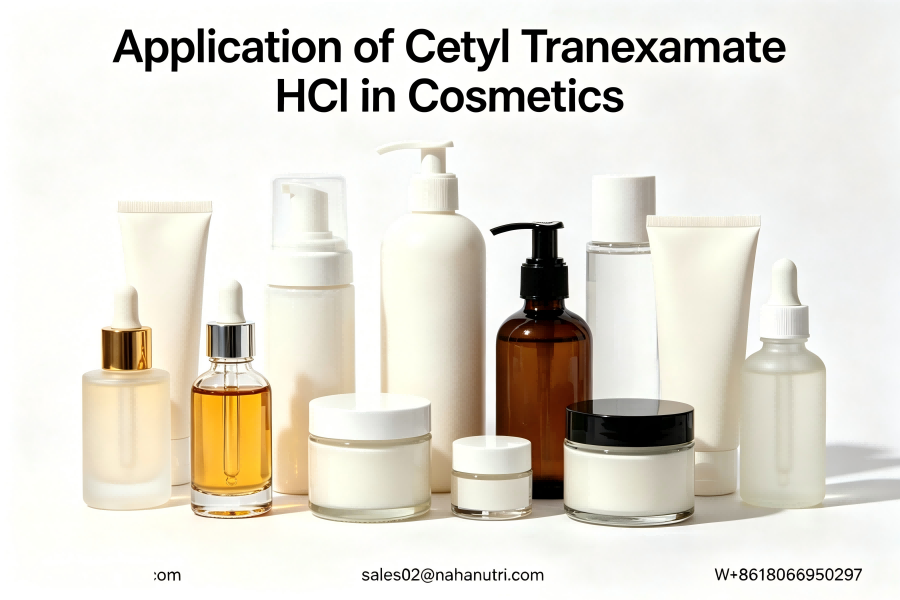
Thanks to its versatility, stability, and efficacy, Cetyl Tranexamate HCl is ideal for a wide range of cosmetic products, especially those targeting brightening, anti-pigmentation, and anti-aging:
- Intensive Brightening Serums: The most common application, leveraging its high permeability to target stubborn melasma, age spots, and PIH at the source.
- Brightening & Anti-Aging Creams: For daily full-face use, addressing dullness, uneven tone, and UV damage with a mild, non-irritating formula.
- Post-Sun Care Products: Calms sunburn-related redness and prevents UV-induced hyperpigmentation.
- Acne Treatment Products: Fades post-inflammatory hyperpigmentation (acne marks) and reduces acne-related redness.
- Pigment Correcting Lotions & Gels: Lightweight formulations for oily or combination skin, targeting diffuse discoloration.
- Eye Creams: Gentle enough for the delicate eye area, fading dark circles (vascular and pigmented) and reducing under-eye redness.
- Recommended Usage: 1–5% (w/w), with optimal efficacy at 2–3%. Ideal pH range: 3.5–5.0. Compatible with most cosmetic ingredients, including other brightening agents (vitamin C, alpha arbutin, niacinamide), moisturizers, and anti-aging actives.
Frequently Asked Questions (FAQ)
Q1: Is Cetyl Tranexamate HCl suitable for sensitive skin?
A: Yes. It has a mild safety profile with a slow-release mechanism that minimizes irritation. Clinical trials confirm it is well-tolerated by sensitive skin, unlike harsh brighteners such as hydroquinone or high-concentration retinol.
Q2: How long does it take to see results?
A: Visible improvements are often seen in 2–4 weeks, with significant fading of dark spots and redness after 8–12 weeks of consistent use (twice daily). Results vary based on pigmentation severity and skin type.
Q3: Can it be combined with other brightening ingredients?
A: Absolutely. It works synergistically with vitamin C, alpha arbutin, niacinamide, and kojic acid to enhance brightening efficacy. Always follow recommended concentrations to avoid irritation.
Q4: Does it cause photosensitivity?
A: No. Unlike some brighteners (e.g., retinol), it does not increase sun sensitivity. In fact, it helps prevent UV-induced hyperpigmentation. However, daily sunscreen use is still recommended for optimal results.
Q5: What is the difference between Cetyl Tranexamate HCl and tranexamic acid?
A: The key difference is solubility and penetration. Cetyl Tranexamate HCl is lipid-soluble, penetrating the skin 60–97 times better than water-soluble tranexamic acid. It is also more potent, stable, and longer-lasting, with a better safety profile.
Q6: Is it safe for long-term use?
A: Yes. Its gentle, non-toxic nature and excellent stability make it suitable for daily, long-term use without the risk of skin damage or sensitization.
Conclusion
Cetyl Tranexamate HCl stands out as a next-generation brightening ingredient that addresses the limitations of traditional tranexamic acid and other harsh brighteners. Its unique lipid-soluble structure delivers unmatched skin penetration, potent and long-lasting efficacy, exceptional formulation stability, and gentle safety for all skin types. Backed by rigorous clinical research, it effectively fades dark spots, evens skin tone, reduces redness, and supports anti-aging benefits—making it a versatile and valuable addition to premium cosmetic formulations.
Name: Yuki
E-mail: sales02@nahanutri.com
WhatsApp:+8618066950297